In a Land of Dinosaurs
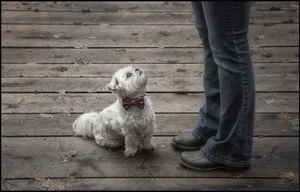
Imagine waking up every morning in a world where every creature around you is roughly the size of a T-Rex. You walk outside, minding your own business, and suddenly a giant shadow blots out the sun. A massive foot slams down nearby. A giant hand swoops down from the sky and—without warning—starts patting you on the top of the head.
(There’s a t-Rex, short arm joke in there somewhere)
That’s life for a small dog.
Small dogs get labeled anxious, reactive, “bossy,” or my personal favorite: suffering from little dog syndrome or Napoleon syndrome. But before we judge them for being worried in a world built for creatures 20–50 times their size, it might help to imagine what that world actually feels like.
Life With Giants
When you weigh 12 pounds and stand eight inches tall, control isn’t really part of your daily experience. Big creatures can scoop you up whenever they please—whether you’re comfortable or not. If a 90-pound dog digs their heels in outside a busy café, we say, “Oh, he’s nervous, give him space.” If a tiny dog hesitates? Someone just picks them up and plops them inside anyway.
Imagine a Diplodocus doing that to you. You’re standing at the entrance of a crowded bar thinking, Nope, absolutely not, when suddenly a giant tail wraps around your waist and carries you in anyway.
Overwhelmed Before They Even Start
Many small dogs are overwhelmed long before they reach adulthood. Picture trying to enjoy a simple walk, and velociraptor-sized beings keep stampeding toward you, knocking you over in their excitement. Random T-Rex hands reach down from impossible heights to rub your head without asking. And sometimes those same giants decide to pick you up—just because they can.
For some tiny dogs, normal dog play can physically hurt. Their bones are more matchstick than megafauna. They know this. Their bodies know this. The world is huge, loud, fast, and very, very unpredictable.
When a Whisper Gets Ignored
If a German Shepherd shows their teeth or growls, the seas part. People give them space. They listen.
When a small dog communicates the exact same thing? People laugh. “Aw, look how cute!” they say, bending down closer.
And when that tiny dog escalates to a bite because nobody listened, they’re labeled “snappy” or “mean.” In a land of dinosaurs, we’d bite too.
Small Dogs Still Need… Dog Things
Small dogs may be little, but they’re still 100% dog. They need just as much:
Exploration (safe, slow, and at their pace)
Social opportunities with dogs who won’t body-slam them or rush up to them
Enrichment that meets their brain’s needs
Physical exercise beyond being carried everywhere
When these needs aren’t met—because the world feels too dangerous or because people underestimate them—it affects their confidence and coping skills.
And yes, genetics play a role too. Some of the genes linked to teeny-tiny body size are also associated with fearfulness and reactivity and many small dogs come from puppy mill situations where the generational trauma of their parents is passed down to them.
Read more on that HERE
That doesn’t mean small dogs are doomed—it just means they deserve understanding, not blame.
Be the Gentle Dinosaur
We can all be gentler giants.
Here’s what that looks like:
Don’t judge someone for picking up their small dog. If you lived in a land of dinosaurs, you’d want your trusted human scooping you up when a stegosaurus comes thundering your way, after they’ve asked you for consent mind you.
Don’t let big dog overwhelm them—even “just being friendly.” A friendly brachiosaurus is still a brachiosaurus.
And for the love of all that is good: stop picking up dogs that aren’t yours. Imagine a T-Rex deciding you needed a cuddle and hoisting you off the ground with its tiny arms. You’d scream. So do small dogs—just with their behavior and body language.
The Big Picture
Small dogs aren’t dramatic. They aren’t bratty. They aren’t trying to be the boss of the dinosaur kingdom.
They’re just navigating a world where everyone else is huge, loud, and capable of picking them up without so much as a “hello.” When we understand this—truly understand it—we make life safer, kinder, and more comfortable for them.
Because in a land of dinosaurs, we’d all be a little reactive too.
Sara Sokol is owner of Mr. Dog Training in Brunswick Maine; A positive reinforcement dog training facility, offering both virtual and in person classes, that has been voted best training in Maine.