Unrealistic Expectations
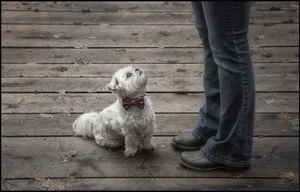
We expect a lot from our dogs, don’t we?
We expect them to be social with every person they meet.
We expect them to be social with every dog they meet.
We expect them to move through the world with the emotional stability of a well-adjusted adult human who’s done years of therapy and maybe a silent meditation retreat or two.
We expect them to be relaxed and confident in every situation—loud restaurants, busy sidewalks, vet offices that smell like fear and betrayal.
We expect them to understand the social rules of an entirely different species… without ever formally explaining those rules.
We expect them to want to engage with us constantly… but also be perfectly content when we leave them alone for hours.
We expect them to ignore their instincts—the very instincts we selectively bred into them over generations.
(Yes, your herding dog wants to herd. This is not a character flaw. This is literally the job description.)
And perhaps most unrealistic of all, we expect them to never show anger, frustration, or discomfort. Ever. Not a flicker. Not a whisper. Just eternal emotional sunshine.
It’s… a lot.
Imagine if the world expected the same from you?
And here’s the reality check: we often expect all of this without actually teaching it.
We assume it will “just happen.” That good behavior is some kind of default setting instead of a learned skill. That exposure equals understanding. That proximity equals comfort. That if we just keep putting them in situations, eventually they’ll “figure it out.”
But dogs aren’t born knowing how to live in a human world.
They don’t automatically understand that greeting every stranger is optional.
They don’t inherently know that leash pressure means “slow down” instead of “fight the system.”
They don’t come preloaded with the ability to self-regulate in overwhelming environments.
Those are learned skills.
And learning requires time. Repetition. Clarity. And a whole lot of empathy.
It requires us to look at the dog in front of us—not the dog we imagined, not the dog we wish we had, not the dog our neighbor somehow ended up with—but the actual, living, breathing animal who has their own temperament, history, and thresholds.
It also requires us to get a little more honest about what we’re asking.
Because “be calm in public” is not one skill—it’s a collection of dozens of smaller skills:
the ability to process stimuli without tipping over threshold
the ability to disengage from triggers
the ability to recover after stress
the ability to choose behavior over impulse
That doesn’t come from a six-week puppy class.
It doesn’t come from drilling “sit”.
And it definitely doesn’t come from hoping for the best and getting annoyed when reality doesn’t cooperate or labelling your dog as stubborn.
It comes from intentional teaching.
From setting dogs up to succeed instead of repeatedly putting them in situations they’re not prepared for.
From adjusting expectations to match where they actually are—not where we think they “should” be.
From understanding that behavior is communication, not defiance.
And maybe most importantly, it comes from recognizing that frustration is often a sign of a missing lesson—not a bad dog.
If your dog doesn’t know how to do something, they’re not choosing to do it wrong.
They’re just… doing the best they can with the skills they currently have and their ability to regulate.
So if you haven’t taught it?
It’s not fair to expect it.
And it’s definitely not fair to get frustrated when it doesn’t magically appear.
The goal isn’t perfection.
It’s clarity. It’s consistency. It’s giving your dog the tools they need to navigate a world that was never designed with them in mind.
Because when we stop expecting dogs to just “be good” and start actually showing them how and helping them…
That’s when things start to change.
Sara Sokol is owner of Mr. Dog Training in Brunswick and West Gardiner Maine; A positive reinforcement dog trainer with two facilities, offering both virtual and in person classes, and a Canine Enrichment Center, and has been voted best training in Maine.